

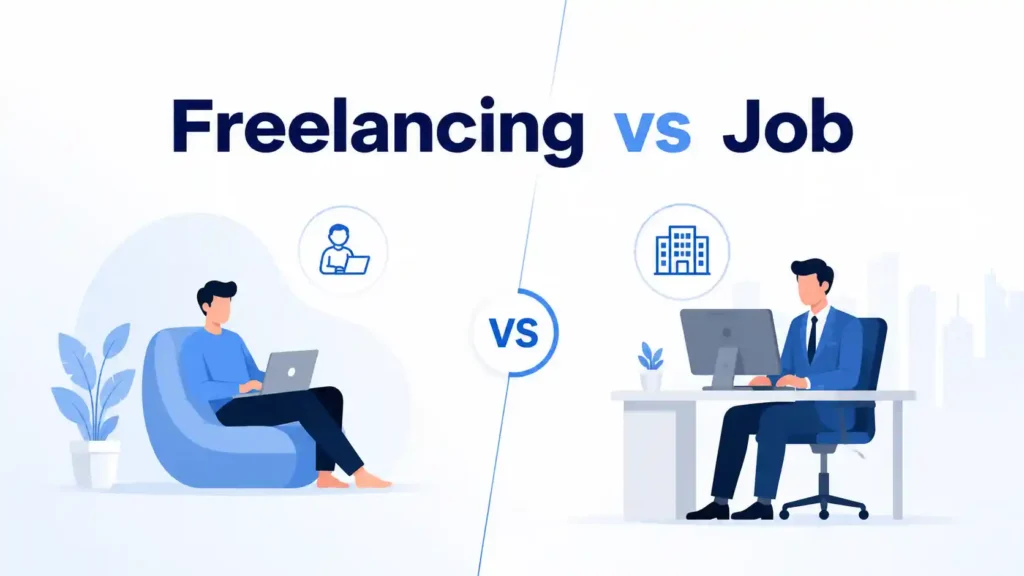
Every other week someone asks me the same question. Sometimes it’s “Shahid, should I quit my job and start freelancing?” Other times it’s the opposite. “I’m tired of chasing clients, should I just find a proper job?”
I get why people are confused. I’ve spent years as a freelance web designer, working with clients from Rawalpindi to the USA through Fiverr and my own website. I’ve had months where the orders wouldn’t stop and months where I refreshed my inbox way too many times. Meanwhile, some of my friends draw a fixed salary, enjoy their weekends properly, and occasionally tell me they envy my freedom. Funny thing is, I sometimes envy their salary slip.
So this is my attempt at an honest comparison. Not the YouTube version where freelancers work from a beach in Bali. Not the fear version either, where every office job crushes your soul. Just what I’ve actually seen, here, in Pakistan.
First, some ground reality
Advice from American bloggers doesn’t always fit our situation, so let’s set the scene.
Pakistan is one of the biggest freelancing countries in the world. Hundreds of thousands of us earn through Fiverr, Upwork, and direct clients, and we bring serious foreign exchange into the country. Payments have gotten easier than they were five years ago, and the government has finally started paying attention to freelancers instead of ignoring them.
The job market, on the other hand, is rough. Fresh graduates can wait months for a decent offer. Starting salaries in many fields haven’t kept up with inflation, and in a lot of households one salary simply isn’t enough anymore. That pressure is exactly why so many people are Googling “how to start freelancing” in the first place.
Okay. Now the comparison.
Why freelancing is worth considering
You earn in dollars and spend in rupees. This one changes everything. A decent freelance web developer charging international rates can out-earn many senior salaried people in Pakistan. And every time the rupee falls, salaried workers quietly get poorer while dollar earners actually benefit. Nobody likes saying that out loud, but it’s true.
There’s no ceiling. In a job, your income is whatever your company decides plus a yearly increment if you’re lucky. As a freelancer, if I want a better month, I take more orders, raise my rates, or add a new service. My effort connects directly to my income. That feeling is addictive.
Your time is yours. You can work early mornings, take a random Tuesday off, attend every family event, and nobody marks you absent. For people looking after parents or kids, this flexibility matters more than money.
You learn fast, whether you like it or not. A freelancer handles clients, pricing, marketing, delivery, complaints, everything. You basically run a one-person company. After a few years of that, your skill set is wider than someone who sat in one narrow role the whole time.
No boss, no politics, no Murree Road traffic at 8am. Enough said.
The ugly side of freelancing nobody posts about
The income swings. I won’t sugarcoat this because it’s the hardest part. Some months are great. Some months are silent, and you don’t know why. A platform changes its algorithm and your orders drop overnight. If you have rent, school fees, and medicines to pay every single month, this uncertainty will eat at you.
There is no safety net. None. No sick leave, no provident fund, no company insurance, no pension. If you don’t work, you don’t earn, and if you fall ill for three weeks, that’s your problem. You have to build your own cushion through savings, and honestly, most beginners don’t.
The first year is brutal. New freelancers often earn close to nothing for months while they collect reviews and build a portfolio. The people showing off their Fiverr earnings never show you the twelve months of struggle before that screenshot. A lot of people quit right in this phase, and I understand why.
You’re never really off. My American clients wake up when Pakistan sleeps. Messages come at 1am. There’s always that little pressure that if you reply late, someone cheaper and faster will take the client. Without discipline, freelancing swallows more of your life than any office job ever would.
And then there’s society. Let’s be real. “Beta, kya karte ho?” is much easier to answer with a job title than with “freelancing,” even if you earn three times more than the job holder. Bank loans, visa files, rishta conversations, all of it goes smoother with a salary slip. Things are slowly improving, but slowly is the key word.
Why a job still makes sense
The salary comes on the 1st. Every month. Good month for the company, bad month, doesn’t matter. You can plan, commit to installments, and sleep peacefully. People underestimate how much mental peace a predictable income buys until they lose it.
Someone teaches you. In a decent organization you learn from seniors, follow proper processes, and get actual training. Freelancers have to teach themselves everything, and the dangerous part is you often don’t know what you don’t know.
The hidden benefits are real money. Medical coverage, paid leave, provident fund, bonuses. Quietly, these add maybe 20 to 30 percent on top of your salary. You only realize their value when a family emergency lands on you.
A known company name opens doors. Job titles and promotions still carry weight in our society and abroad. A CV with recognizable employers gets respect that a freelance profile is still fighting for.
When you leave the office, you’re done. Evenings and weekends belong to you, at least in a healthy company. Trust me, plenty of freelancers envy this quietly.
Where jobs fall short
Your income is capped, and in a weakening currency. Your raise might be 10 percent while inflation runs higher. So your salary “grows” on paper while your real purchasing power shrinks year after year. It’s a slow leak most people don’t notice until it’s serious.
Someone else controls your life. Your hours, your leaves, your location, even your career direction. One reshuffle or one bad manager can undo years of your effort, and there’s little you can do about it.
Job security is partly a myth. We treat jobs as “safe,” but layoffs and closures happen all the time. Think of it this way: a job means you have exactly one client, your employer. Lose that one client and you lose 100 percent of your income in a day. A freelancer with ten clients never loses everything at once.
Talented people get paid like average people. Increments reward the number of years you’ve sat in the chair, not how good you are. If you’re exceptional, you’ll probably outgrow your salary long before your company admits it.
So which one should you pick?
My honest answer: it depends on your life stage and your temperament, not on what’s trending on LinkedIn.
Go with a job, at least for now, if you’re supporting a family with no savings, if you’re a fresh graduate who needs structure and mentorship, or if an unpredictable income would genuinely wreck your peace of mind. There’s no shame in any of that. A job is not a failure, whatever Instagram tells you.
Go with freelancing if you have six months to a year of expenses saved (or family backup), you already have a skill people pay for, and you can survive rejection and dry spells without falling apart. Self-discipline is non-negotiable here. Nobody will check whether you worked today.
But honestly? For most people I suggest a third option: don’t make it either/or. Keep your job or your studies, and freelance in the evenings. Build your reviews and clients slowly, with zero desperation. When your freelance income matches your salary for several months in a row, then switch, confidently and on your own terms. That’s how sustainable freelance careers are actually built. Not by rage-quitting after a motivational video.
Final thoughts
Freelancing gave me things no job could have. International clients, dollar income, my own brand with my own name on it. But it also demanded things no job ever would. Patience through empty months, and the ability to be my own accountant, marketer, manager, and sometimes my own therapist.
Neither path is better. One trades security for freedom, the other trades freedom for security. The real question is which trade suits your life right now.
And whichever side you pick, keep building skills the world actually pays for. Because in the end it’s not the job or the freelancing that secures your future. It’s what you can do.
Thinking of starting your freelance journey in web design, or need a portfolio website that actually brings clients? Get in touch. I’ve been down this road and I’m happy to help.