

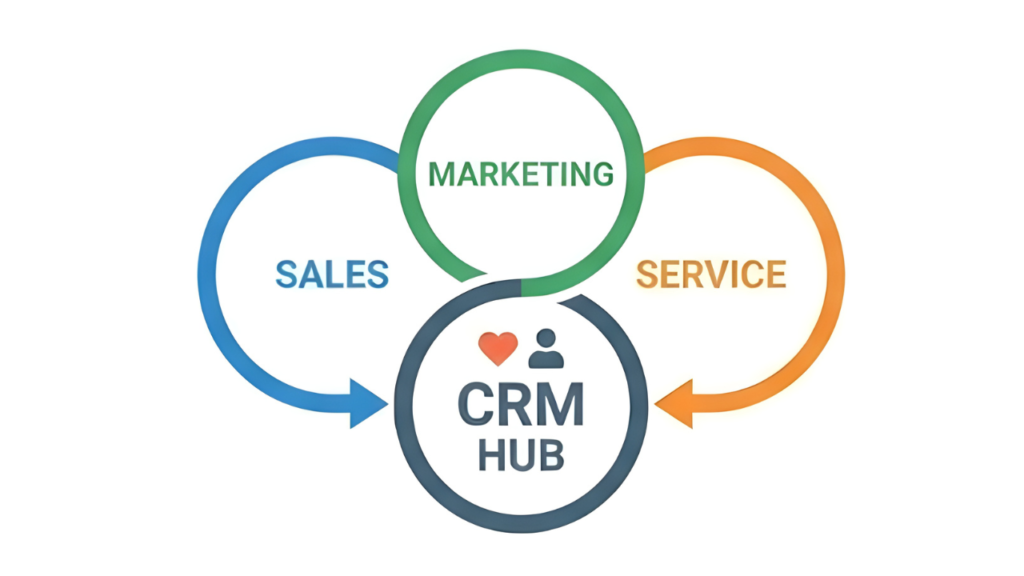
In today’s business landscape, managing customer relationships effectively can make the difference between thriving and merely surviving. This is where CRM systems come into play, transforming how companies interact with their customers and manage their sales processes.
Understanding CRM
A CRM, or Customer Relationship Management system, is a technology platform that helps businesses manage all their interactions and relationships with current and potential customers. At its core, a CRM serves as a centralized database that stores customer information, tracks communications, and provides insights to help businesses build stronger, more profitable relationships.
A good CRM stores and remembers every detail about every customer interaction your company has ever had. It consolidates customer data from multiple channels into one accessible location, ensuring that everyone in your organization has access to the same up-to-date information.
The Core Functions of a CRM
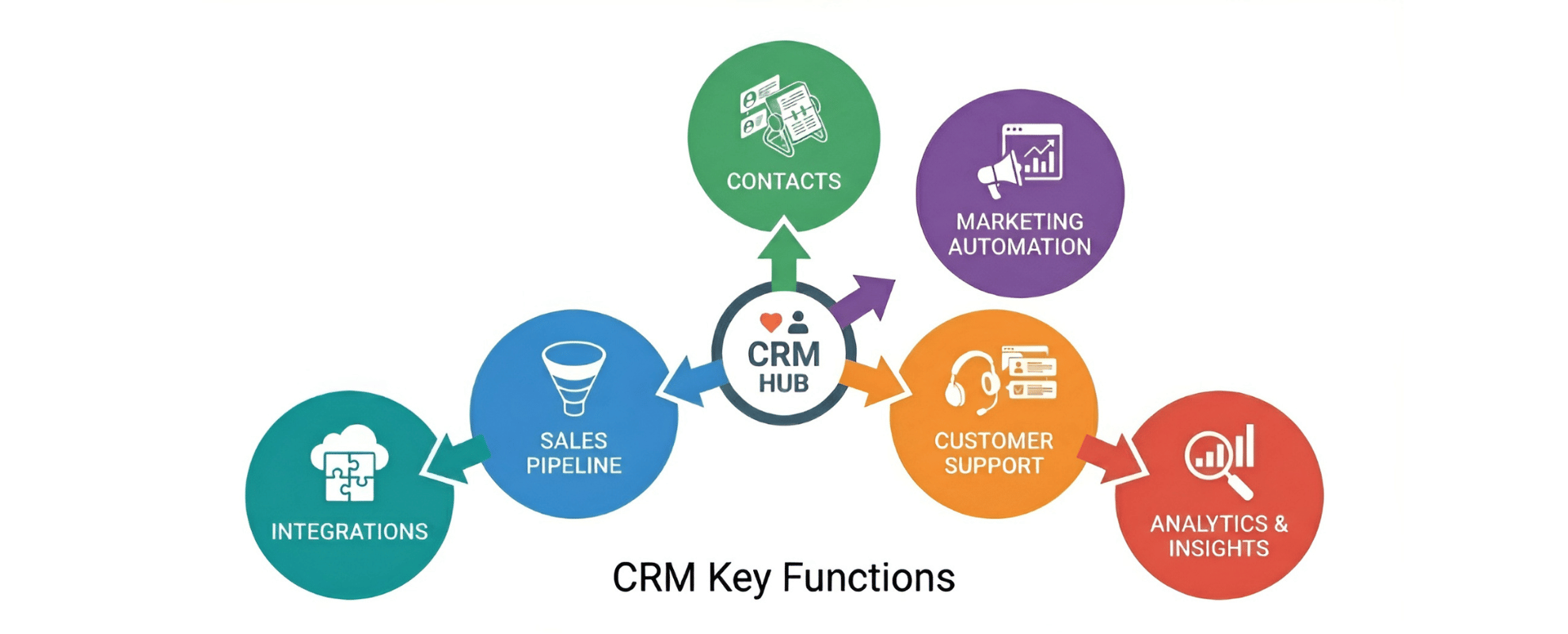
Modern CRM systems typically handle several key functions. They maintain comprehensive contact management, storing detailed information about customers including names, addresses, phone numbers, email addresses, social media profiles, and interaction history. They track every touchpoint a customer has with your business, whether that’s a phone call, email, meeting, or social media interaction.
CRM systems excel at sales pipeline management, allowing sales teams to track leads through every stage of the sales process, from initial contact to closed deal. They provide visibility into where each opportunity stands and help forecast revenue based on pipeline data.
Marketing automation is another crucial function, enabling businesses to create targeted campaigns, segment audiences, track campaign performance, and nurture leads automatically. Many CRMs can also handle customer service and support, managing support tickets, tracking response times, and maintaining a knowledge base to help resolve customer issues efficiently.
Types of CRM Systems
CRM systems generally fall into three main categories. Operational CRMs focus on streamlining customer-facing processes like sales, marketing, and service. They automate workflows and ensure smooth handoffs between departments.
Analytical CRMs emphasize data analysis, using customer data to identify patterns, predict behaviors, and generate insights that inform business strategy. These systems help answer questions like which customer segments are most profitable or what factors lead to customer churn.
Collaborative CRMs facilitate information sharing across different business units and even with external stakeholders like suppliers or partners. They ensure that everyone who interacts with a customer has access to relevant information, creating a unified customer experience.
Key Benefits of Using a CRM
Implementing a CRM system offers numerous advantages. Perhaps most importantly, it provides improved customer relationships through personalized interactions based on complete customer histories. When your sales rep knows that a customer recently had a support issue or showed interest in a particular product, they can tailor their approach accordingly.
CRMs significantly increase sales efficiency by automating routine tasks, prioritizing leads, and providing sales teams with the information they need exactly when they need it. Sales reps spend less time on administrative work and more time actually selling.
The data-driven insights generated by CRM systems enable better decision-making across the organization. Managers can identify trends, spot problems early, and allocate resources more effectively based on real data rather than gut feelings.
From an organizational perspective, CRMs enhance collaboration by breaking down information silos. Marketing knows what sales is doing, sales knows what support issues exist, and everyone works from the same customer truth.
Common CRM Features
Modern CRM platforms come packed with features designed to support various business functions. Contact and lead management forms the foundation, organizing all customer and prospect information in searchable, customizable databases.
Sales force automation handles repetitive tasks like data entry, follow-up reminders, and proposal generation. Email integration connects the CRM with your email system, automatically logging communications and enabling email campaigns directly from the platform.
Reporting and analytics dashboards provide real-time visibility into key metrics like sales performance, pipeline health, customer satisfaction scores, and marketing ROI. Mobile access ensures that field sales reps and remote workers can access critical information from anywhere.
Many CRMs now incorporate artificial intelligence capabilities that can predict which leads are most likely to convert, suggest next best actions, or even automate data entry by extracting information from emails and documents.
Choosing the Right CRM
Selecting a CRM system requires careful consideration of your specific business needs. Start by evaluating your company size and growth trajectory. A small business might need something simple and affordable, while an enterprise requires robust features and scalability.
Consider your industry’s specific requirements. Real estate CRMs differ significantly from those designed for manufacturing or retail. Look for systems with relevant features and terminology that match your business processes.
Integration capabilities matter enormously. Your CRM should connect seamlessly with your existing tools like email platforms, accounting software, marketing automation tools, and any industry-specific applications you use.
User adoption ultimately determines CRM success, so prioritize systems with intuitive interfaces that your team will actually want to use. The most feature-rich CRM is worthless if your employees find workarounds to avoid it.
Implementation Considerations
Successfully implementing a CRM involves more than just purchasing software. You’ll need to plan for data migration, moving existing customer information from spreadsheets, old databases, or other systems into your new CRM while ensuring data quality and consistency.
User training is critical for adoption. Invest time in teaching your team not just how to use the system, but why it benefits them personally. When people understand how a CRM makes their jobs easier, they’re more likely to embrace it.
Customization allows you to tailor the CRM to match your unique business processes, but be cautious about over-customization, which can complicate updates and make the system harder to manage.
Establish clear governance policies around data entry standards, who has access to what information, and how the system should be used to maintain data quality over time.
The Future of CRM
CRM systems continue to evolve rapidly. Artificial intelligence and machine learning are becoming increasingly sophisticated, offering predictive analytics, automated data entry, and intelligent recommendations. Social CRM integration helps businesses monitor and engage with customers across social media platforms, treating social interactions as first-class customer touchpoints.
The trend toward customer data platforms represents an evolution beyond traditional CRM, creating unified customer databases that integrate with numerous systems to provide a complete view of the customer journey across all channels and devices.
Making the Most of Your CRM
A CRM is ultimately a tool, and like any tool, its value depends on how you use it. Keep your data clean and current by establishing regular data hygiene practices. Regularly train users on new features and best practices. Continuously optimize your processes based on what the data tells you. Most importantly, remember that the goal isn’t to manage technology—it’s to build better relationships with the people who matter most to your business: your customers.
When implemented thoughtfully and used consistently, a CRM system becomes the operational heart of a customer-centric organization, enabling businesses to serve customers better, close more deals, and grow more sustainably.